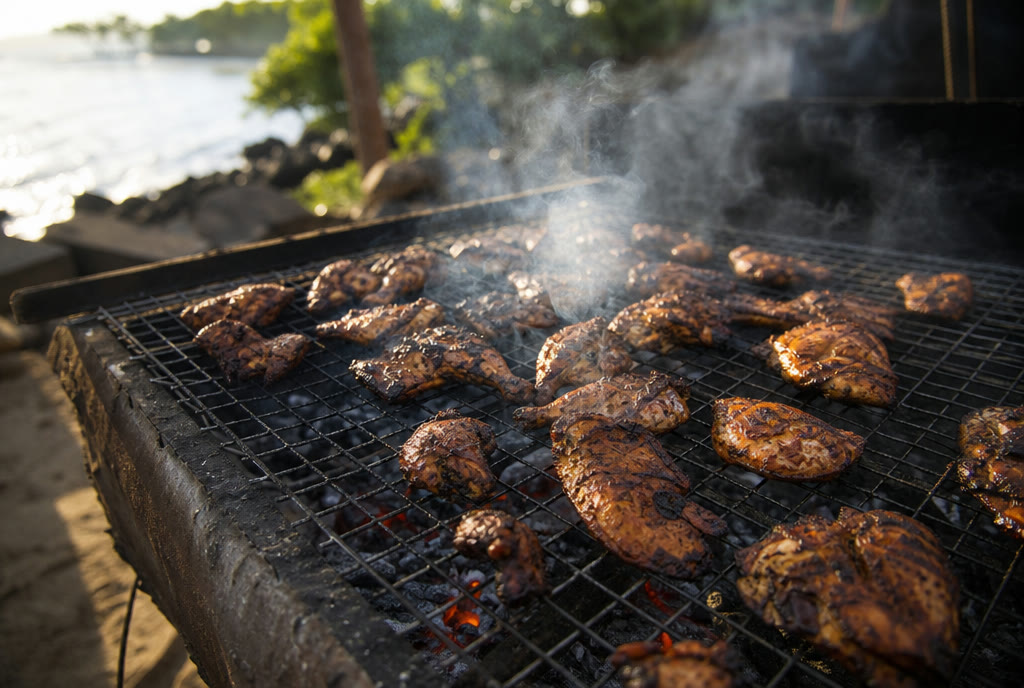
Real jerk announces itself from a quarter mile away. Not with a sign — with smoke: sweet, peppery, unmistakably pimento, drifting across the road from somewhere you should immediately stop.
The tradition goes back centuries to the Maroons, who slow-cooked wild pork in hill country over green pimento wood — allspice, to the rest of the world — because the smoke both flavoured the meat and hid the fire. Everything that matters about jerk is still in that sentence: the wood, the slowness, the smoke doing the seasoning's second half.
How to spot a proper pit
- Pimento wood or a steel drum, lid down, smoke leaking at the seams. Open flame grilling is barbecue — good, but not jerk.
- A marinade that's had time: scotch bonnet, thyme, scallion, allspice berries, worked in overnight.
- No menu to speak of. Chicken, pork, maybe fish on Fridays, festival or breadkind on the side.
- A cook who won't be hurried. Jerk keeps its own clock.
Boston Bay, on the east coast near Port Antonio, is the spiritual capital — a cluster of pits above a surf beach where the recipe is treated as a public trust. But you don't need the drive: ask us and we'll point you to the nearest pit worth its smoke, or set the kitchen loose on a jerk night at the villa, done properly, over the right wood.
One warning from experience: the pepper sauce offered "if yuh brave" is not a dare to accept casually. Start with a drop. There is no dignity in the alternative.
Planning a trip around this? We're ten minutes from the Montego Bay Convention Centre — see our rooms and rates or check your dates.